
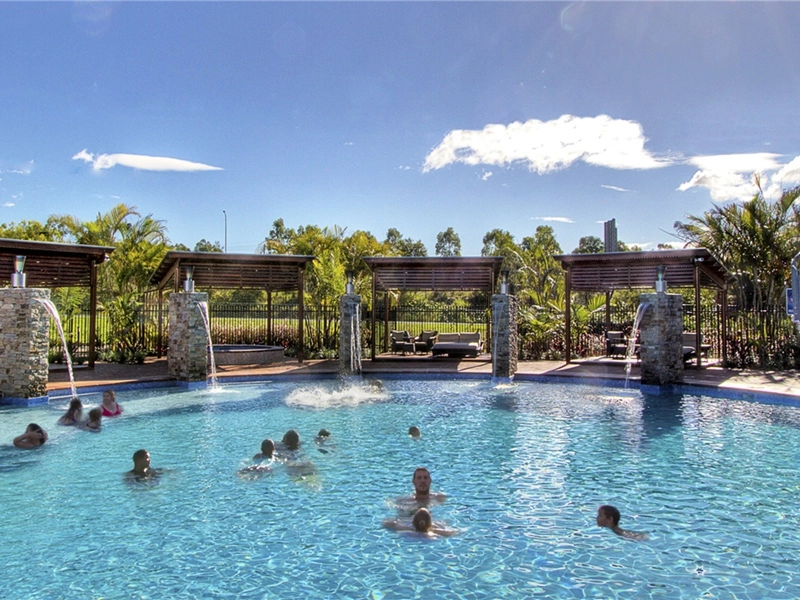
Splash pads and spray features move water in a different way from a swimming pool. Water is sprayed, spread across a deck, and drained within seconds, so a recirculation loop has to collect it, treat it, and return it without delay. The details of that loop decide how much fresh water the feature needs and how reliably it runs.
A properly planned Pool Water Treatment strategy keeps water moving through filtration and disinfection instead of relying on frequent replacement. Jinchao operates across water park planning, equipment manufacturing, construction, and project support, providing an industry context for understanding how circulation design can influence long-term resource use.
Specify the Loop Around the Spray Features
The loop starts at the deck, where grading directs water to drains and then to a collector or balance tank. The tank provides a buffer so pumps are not starved when many features run at once. Its volume, the drain capacity, and the pump flow should be selected as one system rather than as separate purchases.
Treatment follows the tank. Filtration removes sunscreen, hair, and debris, and disinfection controls microorganisms before water returns to the nozzles. Because splash features run in short cycles with many users, the treatment line should be sized for the peak number of features operating together, not for the average.
Controls tie the loop together. Timers, activation buttons, flow sensors, and tank-level switches let features run only when guests are present, which cuts both water and electricity. Clear access to valves, strainers, and sampling points keeps these controls maintainable once the pad is open.
Reduce Losses Around Splash Features
Splash-based attractions create a different water-use pattern from conventional swimming pools. Water may leave the immediate play area through spray, overshoot, drainage, and guest movement, making collection and return pathways especially important. A splash pad recirculation system can capture water from designated drainage areas and send it back through treatment rather than allowing usable water to flow directly into wastewater channels.
The layout surrounding an attraction can make that recovery process easier or harder. Sloped surfaces, collection drains, holding tanks, pump locations, and pipe routes need to work together so that water reaches the treatment circuit efficiently. Poorly positioned drains may increase standing water or require additional cleaning, while unnecessarily long pipe runs can increase hydraulic resistance.
Operating behavior matters as well. Spray intensity, activation periods, and attraction schedules can influence how much water is lost during lower-attendance periods. Automated controls can adjust operation according to programmed schedules or demand, reducing unnecessary circulation and spray activity when parts of the facility are not in use. Such measures support water park operating cost reduction while retaining the intended guest experience.
Connect Treatment With Equipment Longevity
Water conservation and equipment protection are closely related. Repeated draining and refilling can increase chemical consumption and freshwater demand, while poorly controlled water chemistry may accelerate corrosion, scaling, or deterioration of mechanical components. Appropriate Pool Water Treatment addresses these issues by combining filtration, disinfection, and chemical control rather than treating water replacement as the primary solution.
Mechanical components also benefit from stable operating conditions. Pumps, filters, valves, and piping experience less avoidable stress when flow rates, pressure, and water chemistry remain within their intended ranges. Regular inspections can identify unusual pressure readings, leaks, filter loading, or changes in pump behavior before those conditions become persistent operating problems.
Technical documentation has a practical role here. A water park manufacturer can provide information about recommended flow rates, equipment configuration, maintenance intervals, and installation requirements. Jinchao’s project guidance covers filtration and pump capacity, underground piping, water turnover, testing, and staff training, illustrating why treatment infrastructure needs to be considered alongside attraction equipment rather than added as an afterthought.
Measure Savings Beyond the Water Bill
A reduction in freshwater use is only one way to evaluate circulation efficiency. Pump electricity, chemical consumption, filter maintenance, wastewater discharge, equipment replacement, and labor can all be affected by how the water system is configured and operated. A useful water recirculation system assessment should examine these costs together instead of measuring water consumption in isolation.
Sub-metering can make the analysis considerably clearer. Separate measurements for major pools, splash zones, filtration discharge, irrigation, and other significant users allow operators to compare consumption against visitor numbers and operating hours. If water use suddenly rises without a corresponding increase in attendance, the change may point toward leakage, excessive backwashing, abnormal splash loss, or another operational issue.
The same measurement principle applies to smaller facilities. A splash pad recirculation system can be reviewed through daily water make-up volumes, treatment performance, pump runtime, and maintenance records. Comparing these figures across seasons helps distinguish normal environmental changes from preventable losses. Over time, the resulting data can support more precise maintenance schedules and more realistic resource budgets.
Conclusion
Recirculation works best when collection, treatment, pumping, controls, and maintenance are specified as one connected loop. For splash features the benefits show up as lower fresh-water demand, steadier chemical use, and less stress on pumps and valves. Measuring those results after opening shows whether the design assumptions held.
The financial effect becomes clearer when operators monitor both resource use and equipment performance. A water park manufacturer can contribute technical specifications during project planning, while facility teams can use operating data to refine daily procedures after opening. Jinchao‘s experience in water park manufacturing and project development provides one reference for connecting equipment configuration with longer-term operational considerations.
Ultimately, the value of water park operating cost reduction lies in making every unit of treated water work longer within the facility. Proper filtration and disinfection support reuse, thoughtful drainage captures water that would otherwise be lost, and regular monitoring reveals inefficiencies before they become routine expenses. With those elements working together, a circulation strategy can conserve resources while supporting reliable day-to-day aquatic operations.

