
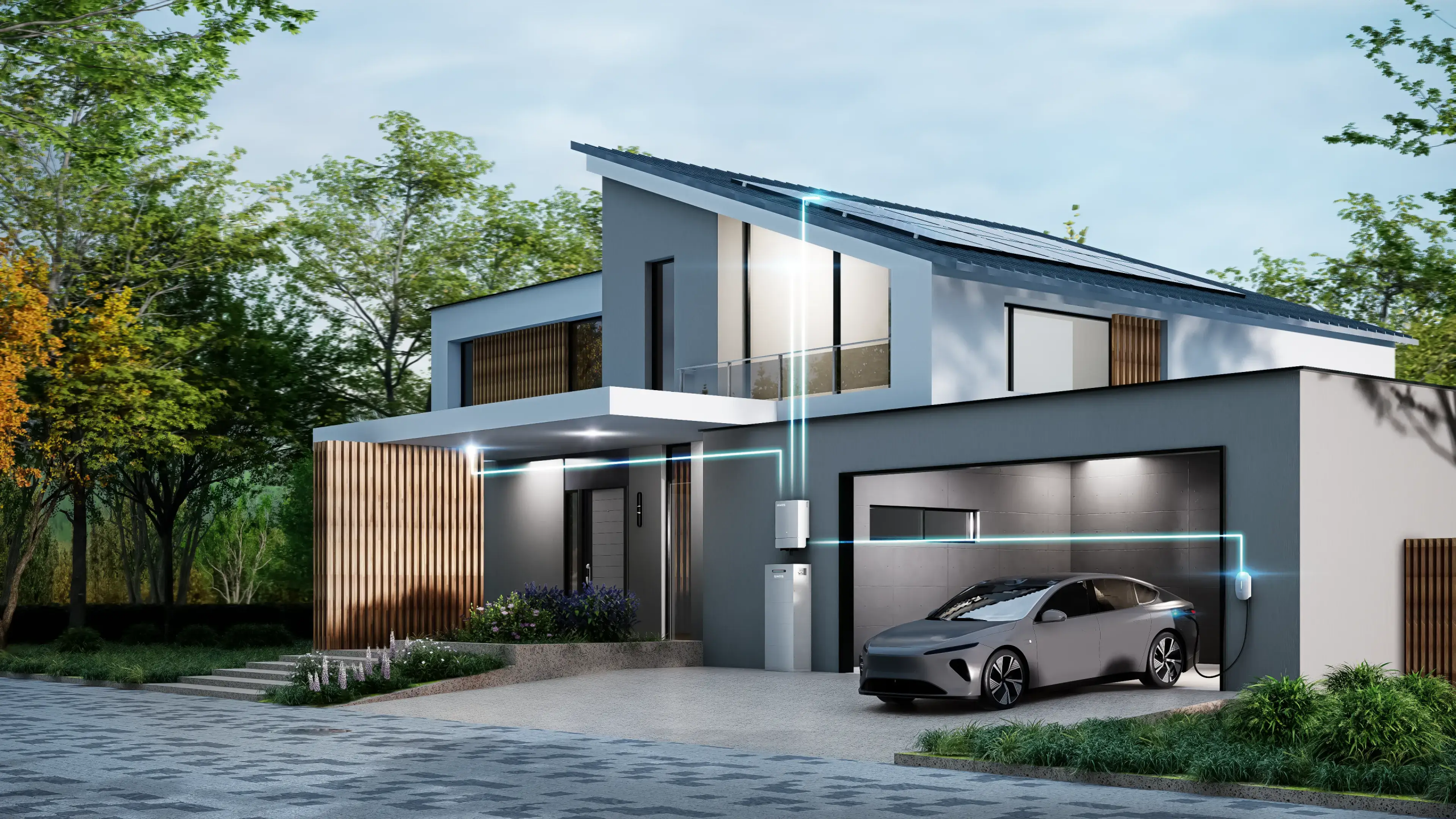
WHES, a manufacturer specializing in scalable energy storage solutions for installers, distributors, and system integrators, develops advanced ess battery platforms for residential and commercial applications. A modular lithium battery system is an energy storage architecture composed of standardized, stackable units that can be expanded according to project requirements. This design approach has become increasingly relevant in modern ess battery deployments, where flexibility, lifecycle performance, and scalable capacity are key considerations for energy system planning.
Scalable Architecture and Capacity Expansion
A core characteristic of a modular lithium battery system is its ability to scale energy capacity through additional modules rather than replacing the entire system. WHES Battery Box is designed with a scalable and stackable structure, allowing capacity expansion from 4.99kWh to 19.9kWh.
In ess battery applications, this modular approach enables system integrators to start with a base configuration and expand gradually as energy demand increases. This reduces upfront investment pressure while maintaining compatibility across all expansion stages. The standardized module design ensures consistent performance, making it easier to manage system integration in both residential and light commercial environments.
Performance Stability and Multi-Scenario Compatibility
Beyond scalability, a modular lithium battery system is engineered for long-term operational stability. WHES Battery Box utilizes long-life cell technology capable of exceeding 10,000 charge-discharge cycles, ensuring extended service life for ess battery systems.
The system also supports a 1C charge/discharge ratio, enabling efficient energy transfer and responsive load handling. In addition, it is designed to be compatible with Virtual Power Plant (VPP) systems, electric vehicle charging integration, and diesel generator hybrid setups. This multi-scenario adaptability ensures that the modular lithium battery system can be deployed across diverse energy environments without requiring structural redesign.
Energy System Integrators’ Utility in Deploying
The use of a modular lithium battery architecture by energy system integrators offers a stable and extensible base for system implementation. WHES incorporates the ability to expand in stages into their ess battery systems, so that capacity may rise in tandem with actual energy consumption. A more adaptable system in the long run is the result of this method’s enhanced deployment flexibility and simplified architecture. In order to meet the ever-changing energy demands, a viable and effective solution is to construct scalable energy storage infrastructures using modular battery systems.

