
Commercial vehicles rarely follow the gentle duty cycles used in battery catalog tests. Delivery trucks may start repeatedly, travel over rough roads, and remain outdoors during winter nights. Each condition changes how a commercial battery delivers current and how quickly its performance may decline.
Fleet operators should examine these stresses together rather than judging a battery by its rated capacity alone. Temperature affects chemical reactions, vibration challenges connections, and repeated engine starts impose brief, heavy loads. Understanding their combined effect supports more useful replacement schedules and purchasing decisions.
Why Temperature Changes Starting Performance
Cold weather slows electrochemical reactions and can increase internal resistance. The starter motor also faces greater resistance from a cold engine. Consequently, a battery may deliver less usable cranking power just when the engine requires more. Fleet buyers should compare cold-cranking ratings with the vehicle manufacturer’s requirements.
High temperatures create a different problem. Extended heat exposure can accelerate chemical aging, although the degree varies by battery chemistry, construction, and operating conditions. Engine compartments and outdoor parking areas can expose batteries to changing heat levels, so a temperature rating should reflect actual service conditions.
A sodium battery manufacturer may publish a broad operating-temperature range, but buyers still need model-specific evidence. They should ask whether stated limits refer to charging, discharging, storage, or short-duration tests. Cold-start results and long-term cycling data answer different questions and should not be treated as interchangeable.
What Road Vibration Does to the Battery
Road vibration comes from uneven pavement, repeated braking, and vehicle movement. Over time, mechanical stress may loosen terminals, damage mounting hardware, or affect internal components. These faults can produce intermittent starting problems even when the measured state of charge looks satisfactory.
Battery installation is therefore part of service-life management. Technicians should verify tray dimensions, clamp pressure, cable routing, and terminal security. Loose restraints allow unnecessary movement, while poorly routed cables place strain on connections. Routine inspections are especially useful on delivery trucks and construction vehicles.
Fleet procurement teams should also request vibration-test information for the proposed design. Test methods, mounting orientation, and exposure duration matter more than a vague claim of ruggedness. When evaluating replacements, operators should review the full installation instead of assuming an identical electrical rating means identical mechanical suitability.
Daily Starts Accumulate Electrical Stress
Each engine start demands a short burst of high current. Batteries must then recover charge during vehicle operation. Frequent short routes may leave limited charging time between starts, especially when lights, ventilation, and auxiliary electronics continue drawing power.
A commercial battery used on an urban distribution route can face a different workload from one installed in a long-haul truck. Count daily starts, record typical driving time, and check overnight electrical loads. These details help buyers judge whether cranking performance, recharge behavior, or reserve energy deserves greater attention.
Poor charging conditions can worsen repeated-start stress. Alternator faults, unsuitable charge settings, and corroded connections may prevent recovery after cranking. Maintenance teams should measure charging voltage and investigate abnormal voltage drops before replacing batteries. Otherwise, a new unit may encounter the same operating problem.
How Buyers Should Compare Replacement Designs
A useful comparison begins with system voltage, required cold-cranking amps, physical dimensions, terminal layout, and charging compatibility. These specifications determine whether a candidate can operate within the vehicle’s electrical architecture. Service teams should confirm them before comparing weight or projected cycle life.
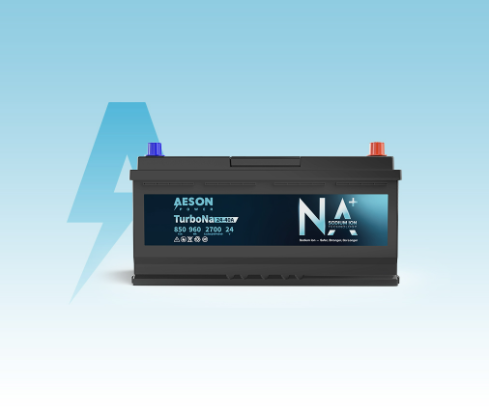
For example, Aeson Power offers the TurboNa 24-40A sodium-ion commercial starting model. Its published specifications list 24 V, 850 A CCA, 960 Wh, an 11.5 kg weight, and dimensions of 394 × 175 × 190 mm. These figures give buyers concrete reference points, not proof of fit for every truck.
The supplier also describes a sealed, maintenance-free design and operation at temperatures up to 80°C for this product line. Buyers should still review vehicle-specific fitment and charging requirements. A sodium battery manufacturer should be able to explain how its test conditions relate to the fleet’s expected temperature, vibration, and starting pattern.
Service Records Reveal the Real Cost
Purchase price rarely describes the full cost of battery operation. Fleet managers also face inspection labor, roadside failures, replacement downtime, and disposal expenses. Reliable service records make it easier to compare battery types without assuming that a higher purchase price automatically brings longer field life.
Useful records include starting complaints, battery age, ambient temperature, charging faults, and installation issues. Grouping results by route or vehicle type can reveal patterns. If failures cluster on rough routes or during cold months, the operating environment may require attention alongside battery selection.
Ask suppliers for documented cycle-test conditions, relevant vibration testing, warranty coverage, and technical support procedures. Buyers reviewing a commercial battery should also check batch consistency and delivery plans. These purchasing checks become particularly important when a fleet intends to replace batteries across many vehicles.
A Practical Decision for Fleet Purchasing
Temperature, vibration, and repeated starts can shorten battery service life through different mechanisms. Fleet operators should inspect charging systems, secure installations, monitor service histories, and match specifications to real duty cycles. Choosing a sodium battery manufacturer also calls for application-specific test evidence.
Australian battery company Aeson Power supplies sodium-ion solutions for commercial starting applications and works with international business customers. They can discuss model suitability and project requirements with distributors and fleet buyers. Contact their team with vehicle specifications, route conditions, and required starting performance to request a technical assessment.

