
Businesses evaluating advertising channels often face a familiar question: should a campaign invest in television or outdoor digital media? There is no universal winner, because the two channels reach audiences in very different environments. Television is designed around scheduled viewing, while digital billboards reach people as they travel through commercial and public spaces. For advertisers, the better choice depends on campaign objectives, audience behavior, creative requirements, geographic priorities, and measurement expectations.
Digital Billboards and TV Reach Audiences Differently
Television advertising reaches viewers through programs and scheduled commercial placements. Modern TV measurement considers factors such as who is watching, when they watch, and how frequently audiences are exposed. This makes television useful for campaigns seeking broad household or demographic reach.
Digital billboards operate differently. Their audiences are connected to physical locations, traffic patterns, and the movement of people through a market. Outdoor advertising measurement can evaluate reach and frequency using standardized audience methodologies, while location remains an important part of campaign planning.
For businesses promoting products tied to specific markets, this geographic characteristic can be especially useful. A brand opening a store, promoting a property development, launching a vehicle dealership, or targeting commuters may benefit from appearing directly along relevant travel routes.
Why Flexibility Gives Digital Billboards an Edge
One major advantage of digital billboards is the ability to change advertising content without physically replacing printed materials. Digital billboard messages can rotate every few seconds, and campaigns can be purchased for specific locations or networks. Messages can also be updated on schedules ranging from weekly to daily or even hourly, depending on the media operator.
That flexibility gives advertisers more opportunities to respond to changing circumstances. Retailers can promote limited-time offers, entertainment companies can advertise upcoming events, and brands can adjust creative according to different times or locations.
Television can also provide sophisticated scheduling, but the creative and media-buying process is generally tied to broadcast or streaming placements. Digital billboards can offer a more direct connection between message timing and physical location.
LED Billboards Deliver Strong Visual Presence
For outdoor campaigns, the physical quality of the display matters just as much as the advertising strategy. LED billboards are designed for large-format visibility, allowing moving images, graphics, and bright visual content to command attention in busy environments.
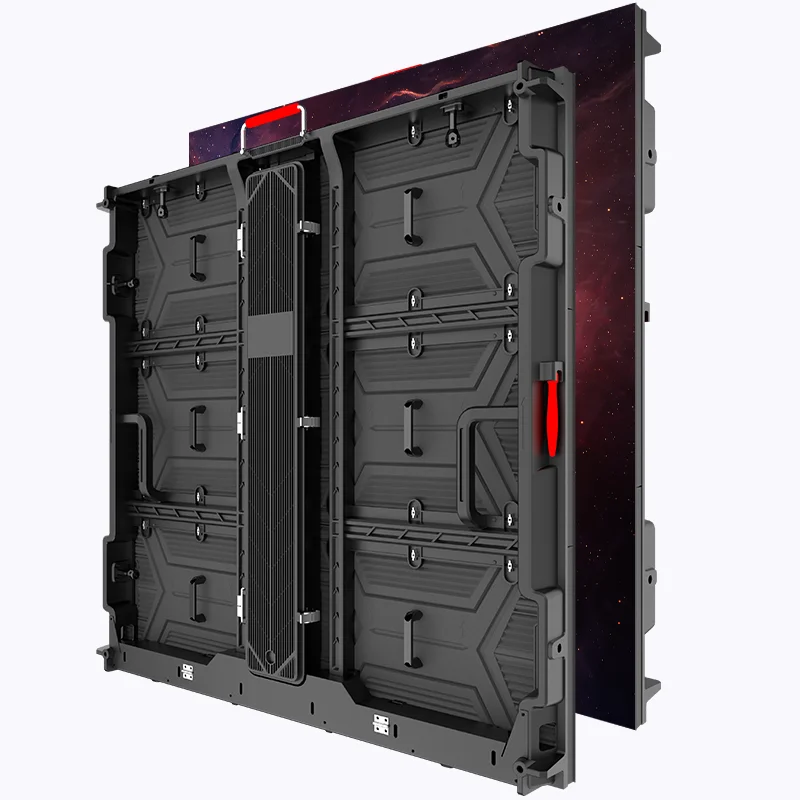
The SFA Pro Series from Coblinks illustrates the type of hardware considered for demanding outdoor fixed-installation applications. The series is available in 4mm, 5mm, 6.67mm, 8mm, and 10mm pixel pitches. It provides 5000–6000 nits of brightness and a refresh rate of at least 3840Hz, supporting clear, high-impact visual presentation.
For advertisers, these specifications matter because an outdoor screen needs to remain visually effective under changing daylight conditions. The appropriate configuration still depends on factors such as installation location, viewing distance, content design, and local environmental conditions.
Where Television Still Has an Advantage
Calling digital billboards universally better than television would oversimplify the decision. Television remains valuable when advertisers need storytelling through longer-form video, sound, personalities, or program-based audience segmentation.
A consumer brand launching a complex product may use television to demonstrate features, build emotional narratives, or explain a proposition in greater depth. TV measurement systems also provide established approaches for evaluating audience composition and viewing behavior.
Television can therefore be particularly effective when the campaign objective depends heavily on audiovisual storytelling rather than immediate visual recognition in a public environment.
Choosing Based on Campaign Objectives
The strongest media strategy often starts with the business objective instead of the technology. If the priority is geographic visibility, repeated exposure along major routes, or time-sensitive promotional messaging, digital billboards can be highly suitable. Their location-based nature allows advertisers to consider where target audiences are likely to encounter the message.
If the objective is detailed product storytelling or broad audiovisual brand building, television may offer stronger capabilities. For some campaigns, combining both channels can be more effective than treating them as competing alternatives.
Recent industry developments also show that OOH is increasingly being evaluated as a measurable performance channel rather than only an awareness medium. OAAA reported in 2026 that its analysis with Kochava found measurable effects across outcomes including store visits, website visits, and app downloads.
The Better Choice Depends on the Buying Context
Digital billboards are not automatically better than TV advertising, but they can be the more practical choice when location, visibility, flexibility, and repeated public exposure are central to a campaign. LED billboards can also provide the large visual footprint required for roadside and other high-traffic applications.
For advertisers comparing media channels, the most useful evaluation should consider audience location, campaign duration, creative format, frequency, measurement, and the action expected after exposure. Comparing only media prices can obscure the actual value delivered by each channel.
Coblinks is a technology-driven LED display manufacturer specializing in fixed-installation and rental display solutions. Its SFA Pro Series outdoor fixed LED display offers multiple pixel-pitch options, 5000–6000 nit brightness, and a ≥3840Hz refresh rate for demanding visual applications. Businesses planning professional LED billboards can contact Coblinks to discuss a display configuration suited to their advertising project.

