
Telecom operators are moving generative AI from experimental pilots into customer service, network operations, knowledge management, security, and business automation. That shift creates a new governance challenge: proving what an AI system did, what information influenced its output, and whether the process remained within approved policies. As the generative AI in telecom market develops, compliance audit trails are becoming a practical foundation for responsible deployment rather than an administrative afterthought.
Why Audit Trails Matter for Generative AI in Telecom
Traditional enterprise applications generally follow predefined workflows, making system activity relatively straightforward to record and review. Generative AI introduces greater variability because outputs can depend on prompts, retrieved information, model versions, system instructions, and external tools.
For telecom operators, this complexity matters because AI may interact with sensitive customer, network, operational, or business information. NIST’s Generative AI Profile recommends managing risks throughout the AI lifecycle, reinforcing the need for organizations to understand and document how AI systems are designed, deployed, used, and evaluated.
A useful audit trail therefore needs to capture more than a final response. It should provide sufficient context to reconstruct a significant AI interaction, including relevant access events, model or application version, data sources, actions taken, and policy decisions. The objective is not to record everything indiscriminately, but to preserve evidence that supports investigation, accountability, and compliance.
What a Telecom-Grade AI Audit Trail Should Capture
A robust audit architecture starts with identity and access. Organizations need to know which user, service, agent, or application initiated an AI operation and what permissions were available at that moment. Role-based controls can help prevent users from accessing information beyond their responsibilities.
Data lineage is another important layer. When a generative AI application retrieves enterprise documents or operational data, the system should maintain enough metadata to identify relevant sources and retrieval events. This can help compliance teams distinguish between an answer generated from approved enterprise information and one influenced by an unverified source.
Model and workflow changes also deserve attention. A response produced by one model version may differ from the response generated after a model update, prompt change, retrieval configuration adjustment, or policy modification. Maintaining version history allows operators to connect outcomes with the configuration that produced them.
ETSI’s emerging work on continuous operation of LLMs and SLMs in production networks highlights similar requirements, including model metadata for operational traceability, real-time performance monitoring, validation, policy enforcement, security, and compliance controls.
Turning AI Business Solutions into Governed Operations
The growing demand for AI business solutions is pushing telecom organizations beyond isolated chatbots. Generative AI can support service teams, network engineers, enterprise sales, knowledge workers, and operational workflows. Yet each additional integration increases the importance of governance.
A governed AI application should therefore connect business functionality with policy enforcement. Access permissions, approved data sources, human review requirements, retention policies, and escalation rules should be incorporated into the workflow rather than handled separately after deployment.
This approach also improves operational investigations. If an AI agent recommends an action or generates customer-facing content, teams should be able to determine which workflow was executed and whether the appropriate controls were applied. Auditability then becomes useful to both compliance personnel and technical teams.
For organizations evaluating AI business solutions, this distinction is significant. A platform may demonstrate impressive generation capabilities while still being unsuitable for regulated telecom environments if administrators cannot control data access, deployment boundaries, or evidence collection.
Data Sovereignty Becomes a Core Design Requirement
Data sovereignty adds another dimension to the generative AI in telecom market. Telecom operators often work within national regulations, contractual obligations, and internal security policies that influence where information can be stored and processed.
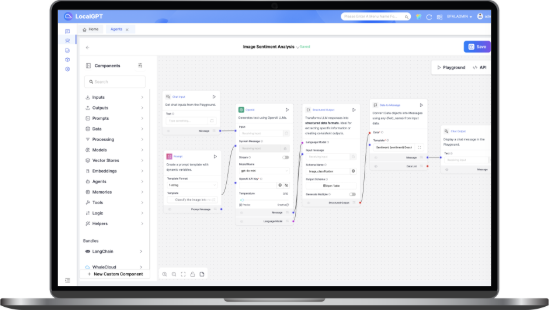
Whale Cloud’s LocalGPT addresses this requirement through an enterprise-grade GenAI architecture built around data sovereignty and security. Its stated capabilities include full data ownership and control, privacy protection, auditability, regulatory compliance, and support for regulated and sensitive data environments. The platform also supports on-premise deployment and multiple AI models.
Such architecture can give telecom organizations greater control over how generative AI connects with enterprise information. It can also help align AI deployment with existing governance structures instead of forcing sensitive workloads into an externally controlled environment.
Building Compliance into the AI Lifecycle
Auditability should not begin when an external auditor arrives. It should be designed into the AI lifecycle from architecture and testing through deployment, monitoring, updates, and eventual retirement.
This principle is increasingly reflected in industry standards work. ETSI notes that AI systems need standardized approaches to testing, documentation, auditing, and continuous monitoring to support trustworthy and compliant operation. Its work on dynamic AI systems also recognizes that point-in-time audits may be insufficient when systems evolve through updates, retraining, and changing data.
For telecom decision-makers, the practical lesson is straightforward: audit records should be treated as operational infrastructure. They need clear ownership, defined retention policies, controlled access, reliable integrity, and processes for reviewing significant events.
Making Trust Measurable as Telecom AI Scales
The generative AI in telecom market will continue expanding as operators connect models with increasingly important business and network workflows. At that stage, trust cannot depend solely on model accuracy. Organizations also need evidence that AI systems operate within defined boundaries.
Whale Cloud’s LocalGPT provides a relevant enterprise approach by combining multi-model compatibility with data sovereignty, security, auditability, and support for sensitive environments. Its platform also enables AI applications to connect with enterprise systems and workflows, helping organizations move from experimentation toward controlled operational use.
Building a More Accountable Telecom AI Future
The next phase of telecom AI will be defined not only by what generative models can produce, but by how reliably operators can govern those capabilities. Strong audit trails connect users, data, models, workflows, and decisions into evidence that can be reviewed when questions arise.
For organizations deploying AI business solutions, this makes auditability a strategic requirement. The generative AI in telecom market can scale more confidently when data sovereignty, traceability, security, and compliance are incorporated into the platform architecture from the beginning. Whale Cloud provides enterprise-focused technology solutions designed to support organizations pursuing secure and practical digital transformation. For businesses evaluating governed generative AI deployments, contact Whale Cloud to discuss a solution aligned with your operational and compliance requirements.

