
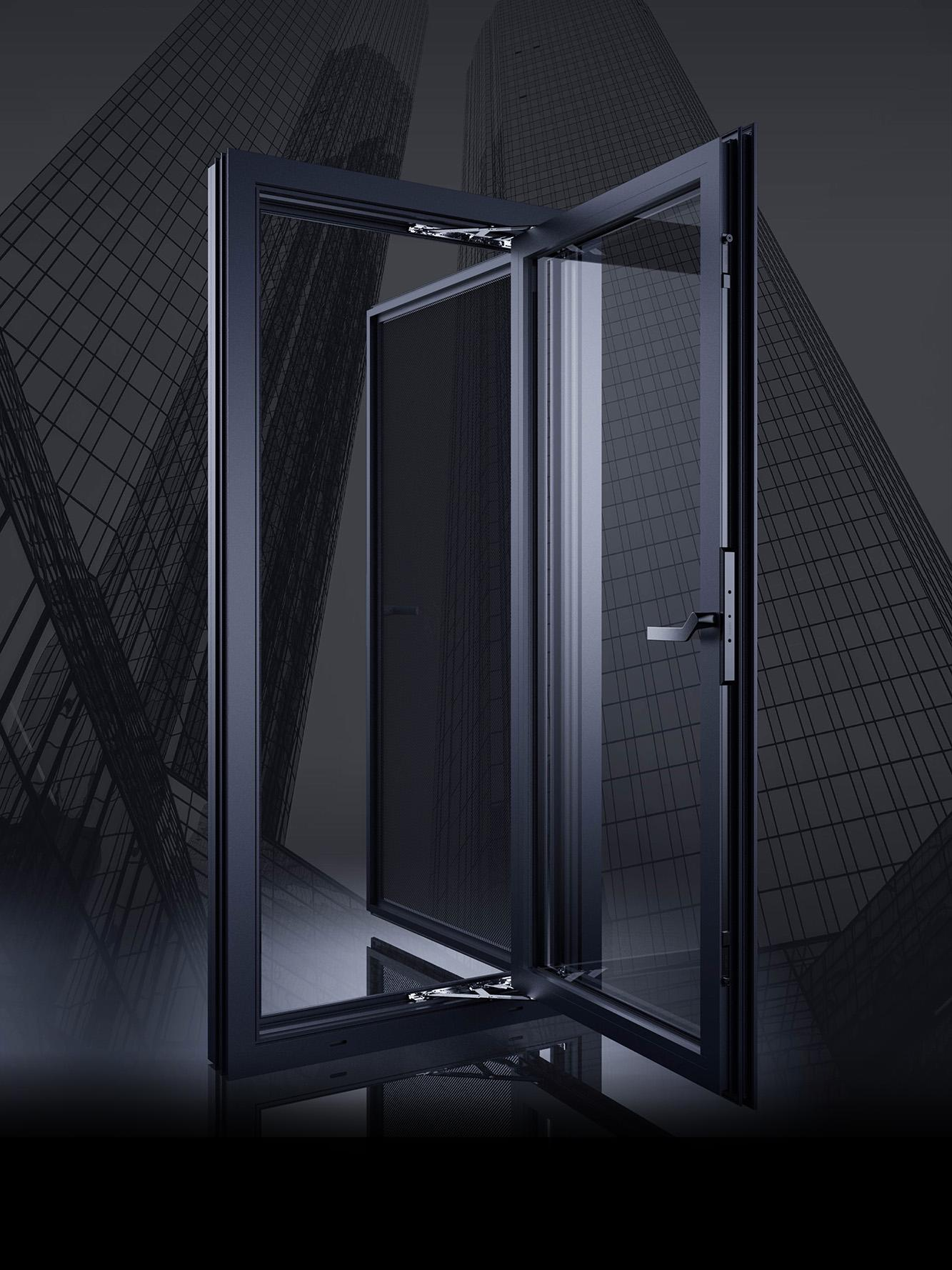
Controlling the opening arc of an outswing casement sash is a critical operational requirement for building facades. Much like specifying reliable swing door hardware solution for a building’s entrance, securing a window sash prevents wind gusts from causing unexpected damage. Without a restraining mechanism, heavy winds can shatter glazing or detach hinges entirely. While architects often focus heavily on pivot hinge door hardware solution for monumental entry panels, outward-opening window restraints demand equal structural attention. The architectural hardware industry offers two primary approaches to this challenge: friction stays and casement window stays hardware solution. Understanding these mechanisms helps professionals match hardware to specific wind exposures and usage patterns.
Friction Stays: Integrated Hinge and Position Control
A friction stay functions as a multi-link articulated arm that replaces the traditional hinge entirely. It utilizes interleaved stainless-steel plates and a nylon-steel slider to generate calibrated frictional resistance along the opening arc. This resistance holds the sash at user-selected angles without requiring a separate locking pin, while still providing a structural load path from the sash to the frame.
CMECH constructs its friction stays from premium 304 stainless steel, offering both C-groove and K-groove versions to suit different profile channels. The support arm is reinforced to a 4 mm thickness and assembled with solid rivets for a secure, anti-loosening connection. Tested through more than 30,000 open-and-close cycles, this three-arm structure delivers substantial stability while reducing hardware count and visual clutter on the sash face.
Casement Stays: Independent Restraint and Wind-Load Limiting
Also known as limiting stays, casement window stays hardware solution act as secondary hardware elements independent of the hinge. They typically feature a telescoping or folding arm with a locking catch that engages at predetermined opening angles. When the sash reaches its intended ventilation position, the stay locks automatically to absorb gust forces, providing a rigid structural link that protects the primary pivot points.
CMECH limiting-stays for outswing‑awning windows range from 8 inches to 20 inches to accommodate various sash widths and groove configurations. Fabricated from premium 304 stainless steel for notable impact strength, the connecting clamp incorporates a barbed-structure that bites securely into the profile. This design delivers strong wind resistance that prevents sudden closure in storm conditions, protecting against both hardware damage and potential occupant injury.
Load Paths and Structural Behavior Under Wind Load
The critical engineering distinction between the two systems lies in how they manage dynamic wind forces. A friction stay distributes wind load across its multi-link friction plates, relying on clamping pressure to resist movement. Because this holding force is inherently finite, sustained gust pressure can eventually overcome it. Just as evaluating dynamic limits is crucial for robust swing door hardware solution, understanding this friction capacity is vital for facade design.
Conversely, a casement-stay locks into a rigid mechanical engagement at a fixed angle, creating a positive stop. CMECH friction-stays address environmental limits through an anti-wind-pressure design that delivers over 1,000 N of opening-angle restriction force. Similar to how pivot-hinge door hardware solution manages loads through specific offset geometries, selected milled-free window-stay variants employ upper and lower hinges with different stack heights to ensure equal frame-to-sash gaps for optimal seal compression.
Installation Geometry and Profile Compatibility
Friction stays require a dedicated groove or mounting channel along the sash edge and frame jamb. The hardware stack heights must match the profile rebate depth to prevent sash-to-frame collision during the closing arc. Milled-free versions eliminate the need for groove machining, allowing retrofits into existing frames while still demanding precise stack-height calculation to maintain weatherstrip compression.
CMECH offers both grooved and milled-free friction-stay configurations with its casement window hardware kit. These setups utilize upper and lower hinge pairs engineered to different stack heights, ensuring the installed sash presents equal gaps on both sides. The limiting stay provides flexible groove adaptation with multiple size options and a barbed clamp that grips standard profiles without additional fasteners, allowing installers to add wind restraint to existing installations.
Cycle Durability and Maintenance Requirements
Friction stays experience continuous wear at the nylon-steel slider interface and the interleaved plates. Over time, their holding torque gradually degrades, requiring periodic adjustment or lubrication to maintain the designed opening resistance. Heavy panels in coastal environments tend to consume this friction capacity significantly faster than lightweight residential sashes. Maintenance schedules for these components often mirror the diligence required for high-traffic swing door hardware solution.
CMECH friction-hinges are validated beyond 30,000 operational cycles with minimal measurable degradation. The stainless-steel construction of both friction‑hinges and limiting‑stay assemblies helps prevent the corrosion-driven seizure frequently seen in lower-grade components. For long‑term performance, periodic lubrication with a silicone‑based spray applied to hinge pivots and locking points is a widely‑recommended maintenance practice for both systems.
When to Specify Friction Stays, Casement Stays, or Both
Lightweight residential outswing sashes in sheltered locations can operate effectively using friction stays alone, provided the rated holding force comfortably exceeds the local wind-pressure design load. However, commercial facades, high-rise residential towers, and coastal installations frequently face severe wind events. In these demanding environments, specifying both friction stays for everyday position control and casement window stays hardware solution for storm-condition positive locking provides a highly reliable specification.
System Integration and Standardized Procurement
Specifying both friction stays and limiting stays within a unified casement window hardware kit ensures compatible groove geometries, matching stainless-steel finishes, and coordinated lock-point spacing. This cohesive specification strategy delivers the same project-scale reliability expected when standardizing pivot hinge door hardware solution across a commercial development.
CMECH offers a complete outswing casement window hardware kit, which includes friction hinges, limiting stays, and multi-point locks as an integrated system. When paired with compliant profiles and professional fabrication, this cohesive package supports sash widths and heights ranging from 400 mm to 2 000 mm, with load‑bearing capacities up to 80 kg for outswing applications.
All hardware specifications, performance data and material parameters are sourced from CMECH official product manuals and certified test reports.

