
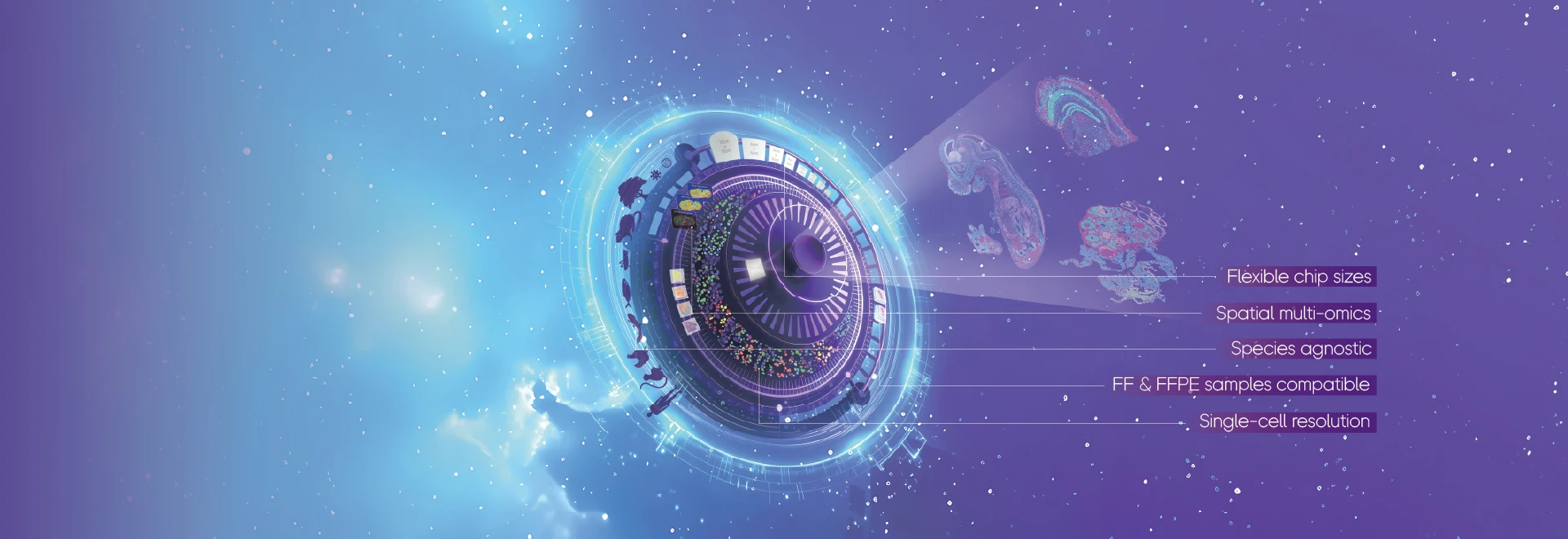
Effective spatial data visualization turns complex coordinate and expression matrices into intelligible biological narratives. For researchers utilizing comprehensive spatial omics solutions, these techniques are indispensable for hypothesizing how neighboring cells influence one another. Platforms from providers like STOmics integrate these visual tools directly into their analysis pipelines, enhancing interpretive clarity.
Mapping Expression onto Tissue Architecture
A primary technique involves plotting gene or protein expression levels directly onto a high-resolution tissue image. This direct spatial mapping allows scientists to see if specific molecules are enriched at immune cell infiltration sites or within defined structural regions. Such spatial data visualization is a cornerstone of integrated spatial omics solutions, providing the first visual evidence of potential cellular communication hotspots.
Employing Interactive Spatial Heatmaps
Beyond single genes, interactive heatmaps that represent entire expression modules across the tissue section are powerful. Researchers can adjust parameters to highlight co-localized gene clusters, suggesting functional synergy. This dynamic facet of spatial data visualization within advanced spatial omics solutions enables the discovery of multicellular interaction networks that static charts might obscure.
Utilizing Neighborhood and Network Graphs
Quantitative analysis of cell-type proximity can be visualized through neighborhood graphs or interaction networks. These diagrams move beyond the image to statistically represent likely communication pairs or clusters. Implementing this through a dedicated platform’s tools transforms abstract spatial omics solutions into concrete, testable models of cellular ecosystem organization.
The progression from raw data to insight relies heavily on sophisticated graphical representation. Mastering these spatial data visualization methods is key to elucidating the complex dialogue between cells. By bundling powerful visualization software with its core technology, STOmics ensures its spatial omics solutions provide not just data, but a clear visual path to scientific discovery.

