
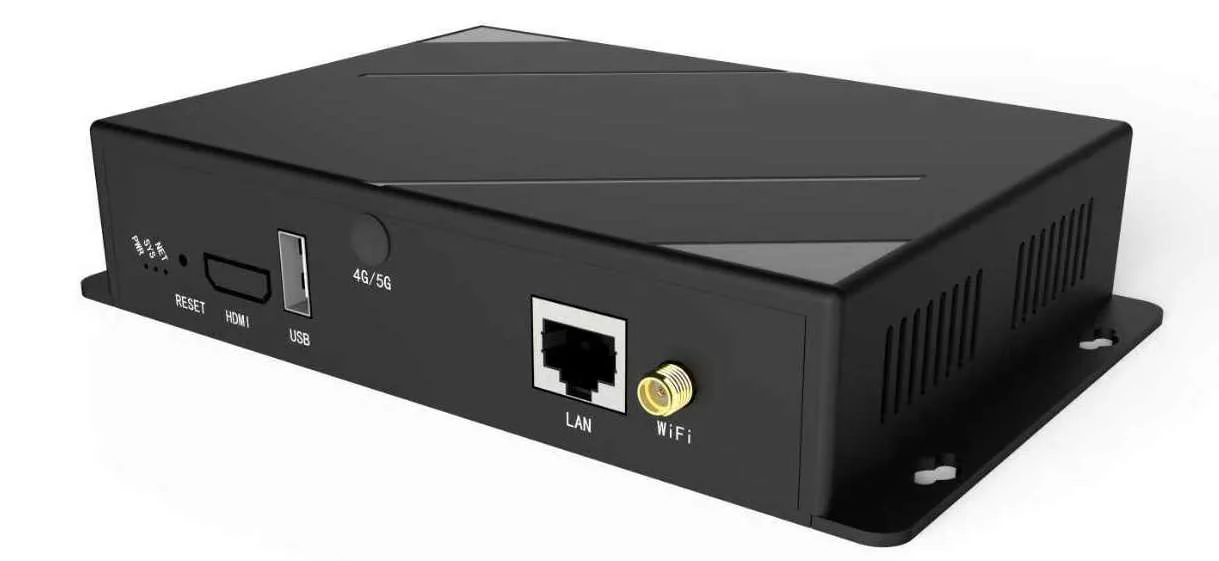
When designing an LED display system, many customers encounter similar terms that can create confusion, especially when selecting the right hardware components. Although an LED control board and a controller card are closely related, they serve different roles within an LED display architecture.
Understanding these differences helps system integrators, rental companies, and commercial display users choose suitable components for stable operation, easier maintenance, and better visual performance. In professional LED applications, selecting the correct control hardware directly affects installation efficiency and display quality.
What Is an LED Control Board?
An LED control board is a general term used to describe the electronic hardware responsible for managing LED display operations. It controls communication between the display system and LED modules, ensuring that video data, brightness adjustments, and image signals are delivered correctly.
Depending on the design, an LED control board may integrate several functions, including power management, signal receiving, and module connection. Modern integrated solutions combine multiple components into a compact design to simplify cabinet assembly and reduce internal wiring complexity. Kystar develops integrated LED control solutions that combine essential functions to improve installation convenience and system reliability.
For example, a three-in-one design can integrate a power supply, receiving card, and HUB board into one unit. This approach reduces the number of separate components inside an LED cabinet while maintaining stable signal transmission and display performance.
What Is a Controller Card?
A controller card is a more specific component within the LED display control system. It usually refers to hardware responsible for receiving, processing, or transmitting display data between the video source and LED modules.
In many LED systems, controller cards include sending cards and receiving cards. A sending card processes incoming video signals and distributes data to receiving cards, while receiving cards control the LED modules inside display cabinets.
A controller card is typically focused on communication and data management. It ensures accurate image reproduction, synchronized operation, and efficient control of large LED screens used in applications such as stages, sports venues, commercial displays, and XR studios.
LED Control Board vs. Controller Card: Main Functional Differences
- System Position and Function
The biggest difference between an LED control board and a controller card is their position in the system.
An LED control board often represents a broader hardware category. It may include multiple functions designed to operate LED modules or cabinets. In contrast, a controller card usually refers to a specific control component responsible for handling data communication.
For customers, this means an LED control board can be a complete integrated solution, while a controller card is usually one part of a larger LED control system.
- Integration Level and Installation Method
Traditional LED cabinets often require separate power supplies, HUB boards, and receiving cards. However, integrated designs have changed how cabinets are assembled.
A modern integrated LED control board can reduce installation steps by combining multiple functions into one device. This helps improve production efficiency and makes maintenance easier for LED display manufacturers and installers.
Controller cards, on the other hand, provide flexibility because different cards can be selected according to project requirements, such as screen size, resolution, refresh rate, and application environment.
- Application Scenarios
Different projects require different control solutions.
For small and medium commercial displays, integrated LED control boards can simplify system configuration and reduce cabinet complexity. For large-scale stage productions, broadcast environments, and XR virtual production studios, professional controller cards provide advanced signal management and precise display control.
Kystar supports various LED control applications, including commercial displays, entertainment projects, command centers, and XR studios, where reliable signal processing and accurate image output are essential.
How to Choose Between an LED Control Board and a Controller Card?
The correct choice depends on project requirements rather than choosing one technology over another.
For projects that prioritize simple installation, compact cabinet design, and reduced wiring, an integrated LED control board can be an effective solution. It helps manufacturers streamline production and allows installers to complete configurations more efficiently.
For complex LED video walls requiring advanced control functions, multiple signal sources, or customized configurations, controller cards provide greater flexibility. They allow engineers to build systems based on specific performance requirements.
Important factors to consider include:
Display size and pixel loading capacity
Required refresh rate and image quality
Installation environment
Maintenance requirements
Signal input and output options
Future system expansion needs
A professional evaluation of these factors ensures that the selected control hardware matches the display application.
Why the Difference Matters for LED Display Projects?
Choosing between an LED control board and a controller card affects not only hardware installation but also long-term system performance.
A properly matched control solution improves image stability, reduces troubleshooting time, and supports consistent visual quality. For high-end LED applications, features such as calibration support, signal reliability, and system protection are increasingly important.
Advanced LED control solutions may also include functions such as pixel-level calibration, brightness adjustment, and improved grayscale performance to enhance the viewing experience.
Conclusion: Selecting the Right LED Control Solution
Although the terms LED control board and controller card are sometimes used interchangeably, they describe different aspects of LED display technology. An LED control board generally refers to a broader or more integrated hardware solution, while a controller card focuses on specific signal control and communication tasks.
Understanding this difference helps customers make better decisions when building LED displays for commercial, entertainment, and professional applications. With the right hardware selection, LED systems can achieve higher reliability, easier maintenance, and superior visual performance.
Kystar continues to provide professional LED display control technologies designed to support diverse applications and evolving visual requirements.
For organizations planning an LED display project, evaluating the relationship between integrated control boards and controller cards is an important step toward creating a stable and efficient display system.

