
Combustion work can put the same CO label on two records with different purposes. One describes the air around a boiler where maintenance staff work. The other describes exhaust passing through a duct. Configuring a portable multi gas analyzer begins with assigning each measurement to the sample and the decision it is meant to support.
The work area needs readings that make sense at the locations people occupy or inspect. An emissions measurement needs a defined sample from the exhaust stream and a documented way to report it. Gas channels, sample handling, and recording requirements follow from that initial distinction, even when the names on the displays look identical.
Separate Work-Area Measurements From Source Measurements
Work-area and source measurements differ in both where air is collected and what the resulting number can establish. Ambient readings can characterize conditions around an appliance or another combustion process. For a portable multi gas analyzer used at an exhaust source, the sampling location, gas conditions, and reporting basis determine how the reading can be interpreted.
Method 3A is an example of an instrumental method for oxygen and carbon dioxide in stationary-source emissions. It defines procedures for collecting and analyzing the sample, with checks on the measurement system. Those requirements illustrate why a channel list alone cannot establish whether an instrument and its sample system suit a particular emissions method.
Even two source readings need compatible reporting conditions. Water vapor occupies part of a wet sample, so a concentration expressed on a wet basis differs from its dry-basis equivalent. Preserving the basis alongside the value matters when a reviewer compares results taken from exhaust streams with different moisture contents.
Start the Channel List With the Process
Fuel composition, combustion conditions, and the surrounding operation influence which gases warrant attention. If combustion is incomplete, carbon monoxide can remain in the exhaust and enter the work area if exhaust leaks from the system. Oxygen and carbon dioxide may help characterize combustion or dilution, depending on the sample and purpose. A concentration at the exhaust has a different interpretation from the same number recorded beside the equipment.
An ambient task assigned to a portable gas detector may also involve a potential fuel release, which calls for checking the combustible gas channel and its reference gas. Sulfur dioxide deserves a separate channel decision where sulfur-bearing fuel or mineral processing makes it relevant. Neither a general combustible reading nor a carbon monoxide channel identifies sulfur dioxide.
Relate Example Ranges to an Ambient Task
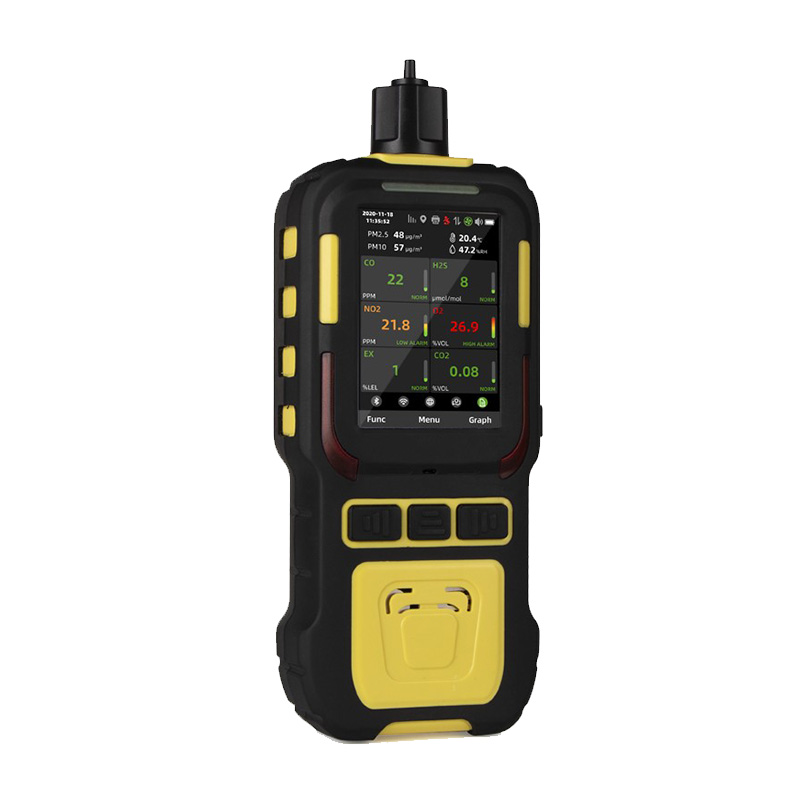
For an ambient survey around combustion equipment, a configuration may combine a CO channel with oxygen, carbon dioxide, and other targets identified for the site. The Bosean K-600M is a portable gas detector with a built-in pump and supports one to six selected channels. The list on the order determines which measurements the delivered unit can make.
One documented six-channel example lists CO at 0–1,000 ppm, oxygen at 0–30% by volume, and carbon dioxide at 0–5% by volume. The other three channels are nitrogen dioxide, hydrogen sulfide, and combustibles. The units differ because the readings describe different quantities. Percent LEL on the combustible channel is relative to the lower explosive limit, while percent by volume describes a fraction of the sample.
Resolution also belongs in the comparison. A CO channel with a 1 ppm display increment can present small changes within its range, but the increment alone does not describe the uncertainty of the measurement. A range, a displayed increment, and the response characteristics of the sensor each answer a different question.
Keep Sample Delivery and the Record Together
Pump operation affects whether a reading represents air drawn from the intended point. In the Bosean example, the pump has six flow settings across 300–800 mL/min and the detector can signal a pump failure. The flow setting describes sample delivery, while the gas reading depends on the fitted sensor and the air arriving at it.
A numerical display is useful for a spot observation. A real-time curve shows how readings change over a series of observations. The K-600M supports alarm, timed, and manual recording to a TF card and export as CSV via USB. Data from the portable gas detector become easier to review when the record also identifies the sampling point, time, fitted channels, and calibration status.
Define What the Delivered Configuration Covers
Acceptance records can connect each requested gas and range with the sample location and the intended use of the data. For a portable multi gas analyzer assigned to emissions work, that review also has to cover the applicable measurement method and the full sample system. Its suitability depends on what reaches the instrument under those conditions.
For a Bosean K-600M ordered for ambient checks, acceptance can focus on the channels supplied, the stated units and ranges, pump status, and usable records. If source measurements are also part of the job, the exhaust equipment and procedures require their own verification. The ambient example does not establish performance with hot, wet, or particle-laden exhaust.
At delivery, the measurement schedule can assign work-area observations to the ambient setup and source results to the exhaust setup verified for the job. The sample location and method then travel with the number into its respective file. Months later, a reviewer can still tell which gas was measured, where it was sampled, and what the result supports.
SEO Title: Multi Gas Analyzers for Combustion and Emissions
Meta Description: Compare multi gas analyzer configurations for work-area air and exhaust, including target gases, measurement ranges and sample handling.

