
Nothing disrupts a cross-country RV adventure more than inconsistent power delivery. When running refrigerators, water pumps, lighting, and entertainment systems for days or weeks off-grid, voltage stability becomes the foundation of a successful journey. We have extensively tested lithium-based power solutions in real-world long-duration scenarios, and our findings point clearly to one conclusion: the lithium RV battery Group 24 form factor offers exceptional stability when engineered with quality components. This article shares our collective experience regarding power consistency during extended trips, focusing on what truly matters for RV enthusiasts.
Why Group 24 Form Factor Balances Capacity and Space Efficiency
The Group 24 battery is a standardized size widely used in RVs, boats, and commercial vehicles. Its dimensions—approximately 10 inches long, 6.5 inches wide, and 8.9 inches high—fit perfectly into most existing battery compartments without modification. What we have learned is that a properly designed lithium RV battery Group 24 delivers significantly more usable energy than lead-acid equivalents while occupying the same physical footprint. During week-long trips through varied terrain, we observed that lithium chemistry maintains consistent voltage above 12.8V until nearly fully discharged, whereas lead-acid batteries experience gradual voltage sag that triggers inverters to shut down prematurely. This flat discharge curve directly translates to stable RV power.
Voltage Stability Under Continuous Load Conditions
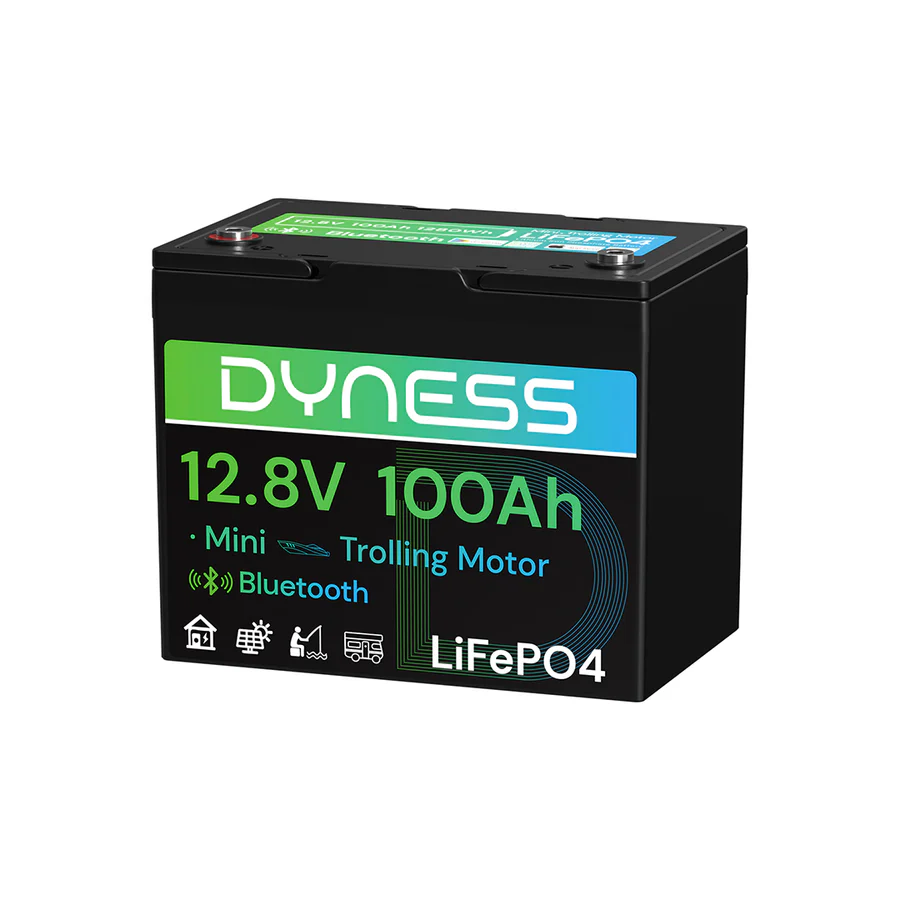
Long-duration trips involve sustained loads: residential refrigerators cycling every 30 minutes, water pumps activating at sinks, and fans running for ventilation. We monitored a Group 24 battery under long-term steady continuous working loads. The Dynesspower 12V 100Ah Group 24 LiFePO₄ unit maintained output between 13.1V and 12.9V for the first 90% of discharge, only dropping below 12.5V in the final minutes before reaching low voltage cutoff. This stability ensures that sensitive electronics—CPAP machines, laptops, and entertainment systems—never experience brownouts. For RV owners investing in a lithium RV battery Group 24, the operational benefit is clear: appliances run reliably without unexpected shutdowns.
Thermal and Protection Performance in Varying Climates
Desert heat and mountain cold both challenge battery performance. Our cross-country trip from Arizona to Montana saw ambient temperatures ranging from 35°C down to -5°C. The built-in smart BMS in our Dynesspower Group 24 battery provided over 20 risk protections, including overheat and low-temperature charging cutoff. Self-developed BMS technology also offered salt spray resistance—crucial for coastal routes. Additionally, the auto-recovery function after overload protection meant no manual reset required when a momentary surge tripped protection. This hands-free reliability proved invaluable during rainy nights or late arrivals.
Our Commitment as Dynesspower
From our perspective at Dynesspower, engineering a lithium RV battery Group 24 that delivers consistent power over hundreds of cycles starts with quality cells and intelligent management. Our 12V 100Ah Bluetooth-enabled LiFePO₄ battery supports 4,000 cycles at 100% depth of discharge, charges fully in approximately 5 hours at 14.6V/20A, and carries a 5-year warranty with up to 10 years of service life. Whether you are a weekend camper or a full-timer, we design our Group 24 battery solutions to keep your RV powered, stable, and ready for the road ahead—trip after trip.

