
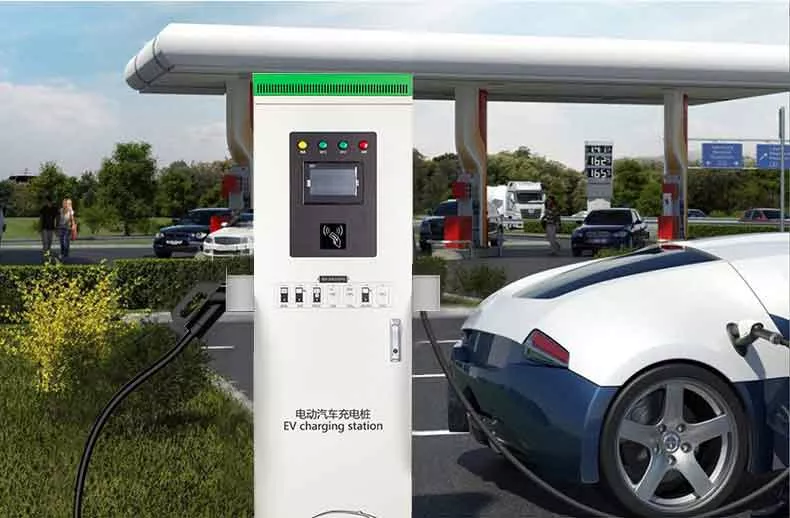
The transition to electric vehicles (EVs) is no longer a niche trend—it is a global infrastructural shift. For property managers, retail developers, and fleet operators, this transformation presents a clear strategic imperative: the immediate need to integrate reliable charging solutions. Installing a commercial EV charging station is far more than an environmental gesture; it is a critical business decision that directly impacts profitability, future-proofs property assets, and taps into a rapidly expanding consumer base.
Businesses today compete not just on product or service quality, but on convenience and alignment with customer values. By offering robust EV charging infrastructure, companies create a powerful new draw, effectively turning their parking facilities into essential destinations. This strategic investment drives customer dwell time, increases foot traffic, and provides a crucial competitive edge in the evolving mobility landscape.
The Financial Case for Strategic EV Charging Commercial
The return on investment (ROI) for establishing high-quality EV infrastructure is multi-faceted, extending beyond simple electricity sales. When a driver chooses a business location—be it a shopping center, hotel, or office park—specifically because it offers charging facilities, that decision directly translates into revenue across several key areas:
1.Increased Dwell Time and Spend: Charging sessions typically last between 30 minutes (for DC fast charging) and two hours (for Level 2 AC charging). During this period, customers are stationary and more likely to engage with on-site amenities. Restaurants see higher lunch traffic, retail spaces benefit from browsing customers, and hotel guests gain another reason to prefer your establishment.
2.Attracting High-Value Demographics: Early EV adopters often represent higher-income demographics with significant disposable income. By catering to them, you secure valuable long-term customer relationships.
3.Future-Proofing Real Estate Value: As EV adoption accelerates, property assets without adequate charging infrastructure will quickly become undesirable for both tenants and visitors. Proactively installing an EV charging commercial system ensures the long-term desirability and valuation of your commercial space.
4.Operational Revenue and Incentives: While the primary goal is often indirect revenue, the charging stations themselves provide a direct revenue stream. Furthermore, federal, state, and local incentives, as well as utility rebates, can significantly offset the initial capital expenditure, making the investment highly attractive from a financial perspective.
Optimizing Performance with Smart Infrastructure
To maximize the benefits of commercial charging, businesses must select infrastructure that delivers uncompromising reliability, speed, and smart management capabilities. Advanced systems, such as those leveraging the core technology behind AMPPAL, are engineered specifically for the demands of high-utilization commercial environments, ensuring optimal performance across diverse application types, from public parking to private fleet depots.
The integration of smart technology is paramount for effective commercial operation:
- Dynamic Power Sharing: This technology is essential for managing grid demands and installation costs. It intelligently distributes available power among active charging ports based on vehicle need and time of use, maximizing efficiency while minimizing strain on the electrical supply. This allows a business to deploy more charging ports without costly utility upgrades.
- Remote Diagnostics and Management: Commercial uptime is directly tied to revenue. Modular, web-connected chargers with remote diagnostics minimize downtime. Issues can often be identified, diagnosed, and resolved virtually, triggering rapid maintenance responses only when physically necessary.
- Modular Design: For maintenance and future upgrades, a modular system is crucial. It simplifies repairs and allows components to be replaced or upgraded independently, significantly reducing long-term service disruptions and ensuring scalability.
Essential Specifications for a High-Performance Commercial EV Charging Station
Choosing the right hardware requires scrutinizing the specifications to ensure durability, speed, and user accessibility. A top-tier commercial EV charging station must be robust enough to handle high-volume use and extreme weather conditions while delivering rapid charging speeds compatible with next-generation EVs.
| Feature Category | Precise Specification | Business Advantage |
| Power Output | Up to 360 kW per port for DC Fast Charging. Supports Level 2 AC up to 19.2 kW. | Provides ultra-rapid charging, minimizing customer wait times and maximizing vehicle turnover. Essential for fleet utilization. |
| Environmental Durability | IP54-rated weather protection. Operating range: -20℃ to 50℃. | Ensures reliable operation year-round, protecting internal components from dust, moisture, and extreme temperatures. |
| Enclosure | Industrial-grade metal enclosure with over-voltage and surge protection. | Guarantees physical robustness and safeguards the investment against damage and grid irregularities. |
| User Interface & Payment | Color touch screen. Supports flexible options: swipe cards, password entry, QR code scanning, and integrated credit card/mobile payments. | Offers a frictionless, universally accessible charging experience for all drivers and simplifies revenue collection. |
These specifications highlight the need for commercial systems built with industrial-grade quality and user-centric features, providing the longevity and reliability necessary for a strong ROI.
The Future of Commercial Energy Infrastructure
For B2B buyers and commercial decision-makers, the investment in EV charging commercial infrastructure is fundamentally about partnership. The choice of a charging provider must be based not just on price, but on the manufacturer’s commitment to quality, support, and future compatibility. Companies specializing in this domain offer critical advantages, including comprehensive two-year standard warranties and technical support systems designed to maintain peak performance year-round.
By integrating smart, high-powered, and reliable charging solutions built on resilient platforms like AMPPAL technology, businesses can actively shape the future of transportation while unlocking significant commercial benefits today. The decision to install EV charging is a powerful statement to customers and stakeholders that your business is future-ready, environmentally conscious, and dedicated to providing maximum convenience.

