
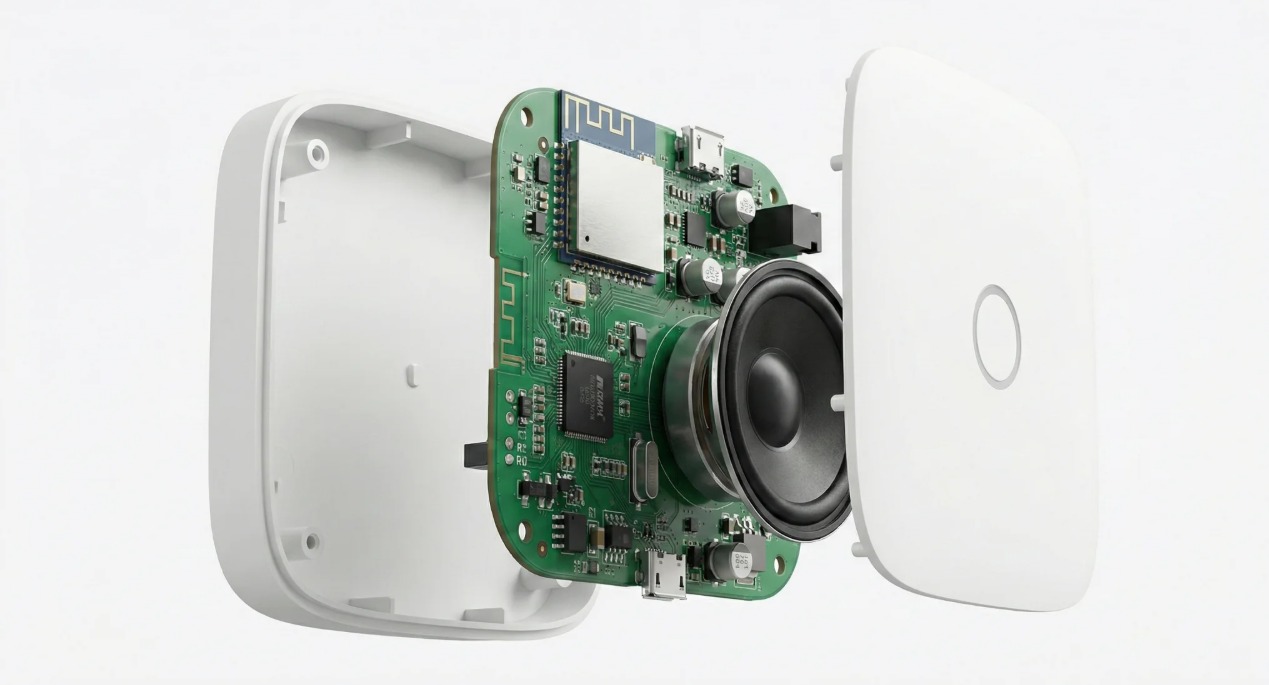
A prototype is often mistaken for a finished product in a smaller form. That view can create unrealistic expectations about cost, timing, and performance. In practice, product design and prototyping is a process of testing ideas before larger production decisions are made. A prototype may focus on electronics, structure, usability, or manufacturing rather than all these areas at once.
Understanding what a prototype can and cannot prove helps buyers communicate more clearly with engineering and manufacturing teams.
A Prototype Is Not Production-Ready
A prototype may use temporary components or manual assembly. Its enclosure may also be made with a method that is not suitable for volume production.
This does not make the prototype less useful. Its purpose is to answer specific development questions. Buyers should first ask what needs to be validated. The answer may involve circuit functions, mechanical fit, appearance, or assembly.
What Should Be Tested?
Different products require different tests. An early electronic sample may focus on power, sensors, buttons, displays, or communication functions.
A later sample can examine enclosure fit and assembly. Products with firmware also need hardware and software to work together correctly. For this reason, one prototype does not always settle every development question. Several revisions may be needed before production.
Design Changes Are Part of Development
A common misunderstanding is that changes after prototyping mean the original design was unsuccessful. Physical testing often reveals problems that are difficult to identify on a screen.
A connector may be hard to reach. A sensor may need a different position. Internal parts may also have insufficient clearance. These findings give engineers practical information for the next revision. The prototype is valuable because it turns design assumptions into physical results.
Why Does Manufacturing Matter?
Manufacturing considerations should not always wait until the design is finished. A product can function correctly and still be difficult or expensive to assemble.
DFM review can examine PCB layout, component placement, assembly methods, and mechanical features. Early review may identify changes that are easier to make before production begins. This is particularly useful for projects that need to move from development into repeated manufacturing.
The PCB and Enclosure Must Work Together
A PCB is not an isolated part of the product. Its dimensions and component positions affect the available space inside the enclosure.
The enclosure also needs to provide room for connectors, buttons, sensors, and other parts. Small changes to internal structure can affect assembly and product use.
The BOM should match the PCB revision as well. Different versions of the two documents can cause problems during engineering review.
A Smart Gas Detector Example
A portable and wall-mountable smart gas detector shows why several design areas need to work together. The device is intended for environmental monitoring in home kitchens, small workshops, and commercial warehouses.
It has a digital display and a sound-and-light alarm. The alarm responds when gas levels exceed defined safety thresholds.
Its plug-and-play design is intended for non-technical users. This means the electronics, sensor arrangement, enclosure, and user interface all need to support the intended experience.
Prototype Validation Goes Beyond Appearance
A prototype that looks good may still require further testing. Buyers should check whether the device performs its required functions and whether the physical parts fit as planned.
For sensor products, testing can include sensor response and alarm behavior. Mechanical checks can examine buttons, openings, mounting, and enclosure assembly. Production-related checks can also reveal whether the design is practical to assemble repeatedly.
What Happens After Testing?
Test results should be recorded before the next revision. Some findings may require changes to the PCB or enclosure, while others may only require updates to assembly instructions.
The related documents should then be updated. This can include the BOM, PCB files, mechanical drawings, firmware, and testing requirements. Keeping these files aligned reduces confusion when the project moves toward production.
A Manufacturing Partner Can Help
When development and manufacturing are handled by separate teams, technical changes may require more coordination. A supplier with engineering capabilities can connect some of these stages.
Proper rapid prototype validation and supply‑chain alignment lay solid groundwork before mass‑production, bridging the gap between original concept and a manufacturable product.
Cost Should Be Viewed Differently
Prototype cost does not always predict production cost. Small quantities can involve different component prices, assembly methods, and engineering work.
Production costs may include PCB assembly, enclosure manufacturing, testing, packaging, and tooling where required. For buyers, the useful question is not simply “How much is one sample?” It is “What costs and services are included at each development stage?”
Keep the Development Files Clear
Accurate documentation is an important part of prototyping. PCB files, BOMs, mechanical drawings, firmware, and test documents should use clear revision numbers.Old versions should be separated from current files. A simple change log can also explain what was modified after each test.
For teams considering electronic prototype manufacturing, this approach makes communication easier and gives engineers clearer information for the next stage.
A Better Way to Judge Prototypes
A prototype should be judged by what it was built to prove, not by whether it already looks like a finished retail product.
Minewing provides PCBA layout, firmware, DFM cost optimization, and rapid prototyping, along with manufacturing support. They also work with OEM, ODM, and JDM projects.
For buyers evaluating product design and prototyping, the practical path is to define the test goal, review the physical results, update the design, and then decide whether the product is ready for the next manufacturing stage.

