
Modern vehicles contain numerous electronic functions that must exchange information while the vehicle is operating. Cameras, communication systems, navigation equipment, vehicle networks, and driver-assistance functions can all generate or consume data.
A domain control unit brings computing and connectivity into a more centralized architecture, allowing information from different vehicle systems to reach a common processing platform.
The mechanism is not simply about placing more computing power inside one box. It involves combining interfaces, processing resources, communication pathways, and system functions so that information can be collected, interpreted, and distributed where it is needed.
Why Multiple Vehicle Functions Need a Common Computing Layer?
Traditional vehicle electronics can rely on numerous individual electronic control units, each dedicated to particular functions. As intelligent driving and connected-vehicle applications become more computationally demanding, maintaining completely isolated processing units can make system architecture more complicated.
A centralized controller provides another architectural option. Instead of treating every function as an independent computing island, the system can bring selected workloads into a shared computing environment. This creates a common layer for processing information from sensors and vehicle networks.
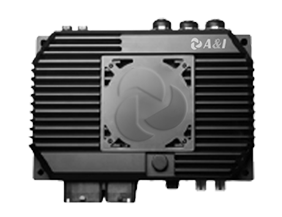
Archimedes Innovation describes its POSEIDON as a central computing and control platform for commercial and intelligent vehicles. The company states that the platform is designed around NVIDIA architecture and provides sensor and I/O interfaces for applications including intelligent driving, robotics, and V2X roadside perception.
The purpose of centralization is therefore closely connected to how vehicle data is handled. Different functions can remain logically distinct while sharing physical computing resources and communication infrastructure.
How Signals From Different Vehicle Systems Reach One Controller?
A vehicle domain controller can only coordinate information that it can receive and interpret. Interfaces therefore form a critical part of the architecture. POSEIDON supports automotive and industrial Ethernet, CAN, CAN-FD, gateway interfaces, HDMI, UART, and general I/O. Its published specifications also list multiple camera inputs.
These connections allow different categories of information to enter the centralized computing environment. Vehicle-network messages can arrive through CAN or Ethernet, while cameras and other sensors can provide data through their respective interfaces.
The controller then acts as an integration point rather than merely a passive connection hub. Software running on the computing platform can organize incoming information and make it available to the applications responsible for perception, driver assistance, connectivity, or other vehicle functions.
This arrangement can reduce the need for every function to maintain a completely separate computing and communication path. It also creates a more structured environment for combining information from different sources.
Where Computing and Sensor Fusion Take Place?
Centralized processing becomes particularly significant when applications need to combine information from several sensors. Sensor fusion can require substantial computing resources because different data streams must be processed and interpreted within the same operational context.
POSEIDON is specified with scalable AI computing configurations. The published performance options include 40 TOPS, 208 TOPS, and 283 TOPS, with NVIDIA Xavier and Orin-based configurations among the listed computing platforms.
This scalability allows the computing configuration to be matched to different workload requirements without changing the basic platform concept. According to the manufacturer’s product description, the system features on‑board Wi‑Fi and 4G/5G, and supports integration with RTK‑INS positioning modules.
For a vehicle using multiple perception inputs, centralized computing can provide a shared environment in which sensor data is processed alongside positioning, communication, and other relevant information.
The controller can consequently serve as the computational center for applications that depend on combining several forms of vehicle data.
How the Controller Connects Processing With Vehicle Actions?
Processing information is only one part of vehicle control. Once software has interpreted incoming data, the resulting information needs to reach other systems. Communication interfaces allow the centralized controller to exchange information with vehicle electronics, sensors, displays, and other connected equipment.
POSEIDON includes eight CAN/CAN-FD interfaces and multiple Ethernet connections in its published specifications. It also provides UART‑based serial interfaces (RS232, RS422) and various digital input/output interfaces.
This connectivity supports a two-way information flow. Vehicle data can enter the controller for processing, while processed information can be passed to other components through appropriate communication channels.
Such an architecture is relevant to advanced driver assistance, sensor fusion, and V2X applications, which Archimedes Innovation identifies among POSEIDON’s applications.
The controller therefore operates as an intermediary between computational intelligence and the wider vehicle system. Its role is not limited to calculating results; it also provides the communication infrastructure needed to make those results useful to connected vehicle functions.
What Determines Whether Centralized Control Works Reliably?
Centralization increases the importance of the controller’s physical and electrical design. A platform carrying multiple workloads must provide adequate computing capacity, interfaces, power management, and thermal management within the vehicle environment.
POSEIDON is specified with a 9–36 V power input range, operating temperatures from -40°C to 85°C, and an IP65 protection level. Its published design also leverages natural‑air cooling combined with enclosure‑based heat dissipation (fan‑less architecture).
Automotive-grade design is another part of the manufacturer’s stated architecture. The POSEIDON product page notes that its main system‑on‑chip supports ASIL‑D functional‑safety capabilities, and the platform is built with automotive‑grade hardware and ECU‑grade components.
These characteristics matter because centralized processing concentrates more functions within one platform. Computing capability alone cannot determine whether such an architecture is suitable. Engineers also need to consider communication requirements, environmental conditions, power, thermal constraints, and the safety expectations of the vehicle application.
A domain control unit manages multiple electronic domains by creating a shared pathway between vehicle data, computing resources, and connected functions.
Archimedes Innovation‘s POSEIDON illustrates this model through its combination of AI computing, sensor interfaces, vehicle-network connectivity, and integrated modules.
The central principle is therefore architectural rather than simply computational: information from different vehicle functions is brought into a common platform, processed according to application requirements, and communicated back through the interfaces needed by the vehicle.
As electronic systems become more integrated, this approach provides a practical foundation for intelligent driving, sensor fusion, and connected-vehicle applications.

