
Moisture management is an important consideration for manufacturers developing apparel, footwear, and other textile-based products for active or cold-weather use. A quick dry material is generally expected to move liquid moisture away from a wet area and support evaporation over a practical timescale. For product developers, however, drying speed is not determined by one property alone. Fiber geometry, pore structure, surface characteristics, moisture affinity, fabric construction, and surrounding airflow can all influence how quickly water is transported and released.
Capillary Channels Provide a Path for Liquid Movement
They can understand wicking by starting with capillary action. When liquid encounters sufficiently small spaces between fibers or within a porous structure, surface tension and interactions between the liquid and solid surfaces can drive the liquid through those spaces. These pathways are commonly described as capillary channels.
A quick dry material can therefore benefit from a network of appropriately sized pathways that distributes moisture instead of allowing water to remain concentrated at one location. Once the liquid spreads across a larger surface area, evaporation can potentially occur more efficiently because more moisture is exposed to the surrounding air.
The geometry of these pathways matters. Very large spaces may provide less capillary driving force, while extremely restricted pathways can slow liquid movement because of flow resistance. Manufacturers consequently need to evaluate the balance between capillary force, permeability, fabric density, and evaporation conditions.
Fiber Spacing Influences Wicking Behavior
They should not treat capillary action as a characteristic that belongs only to the fiber itself. The spaces between fibers are part of the moisture-transport system. Yarn construction, fiber diameter, fabric density, surface treatment, and finishing can change the dimensions and continuity of these spaces.
For a quick dry material, this means that laboratory performance at the raw-material level may not automatically represent the behavior of the finished garment. Sewing density, laminated layers, lining fabrics, and outer shells can interrupt or redirect moisture pathways.
Product engineers therefore need to examine the complete material stack. A highly absorbent layer, for example, may retain moisture rather than rapidly moving it toward an evaporation surface, depending on its construction and drying environment.
Smaller Channels Are Not Automatically Better
They also need to avoid a simple assumption that smaller capillaries always produce faster drying. Narrow spaces can generate strong capillary forces, but liquid movement is also affected by resistance within the pathway. The practical result depends on the interaction between channel dimensions, liquid properties, material surfaces, and the overall structure.
A quick dry material should therefore be evaluated according to the intended moisture pathway rather than by pore size alone. Manufacturers can consider whether moisture should spread laterally, move through the thickness of a textile, or transfer from an inner layer toward an outer surface.
This approach is particularly relevant to multilayer clothing, where the objective may be controlled moisture transfer rather than maximum absorption.
Surface Energy Changes the Way Water Spreads
They can also examine how the surface interacts with water. Hydrophilic surfaces tend to interact more readily with water, which can encourage spreading and liquid transport under suitable structural conditions. Hydrophobic surfaces can behave differently, often promoting water repellency rather than rapid liquid absorption.
A quick dry material may use either behavior depending on where it sits within the product architecture. An inner layer may be designed to manage perspiration, while an exterior layer may need to resist environmental moisture.
The important point is that wicking and water repellency are not identical functions. Product teams need to determine whether the material is intended to absorb, transport, spread, evaporate, or prevent liquid penetration.
Y-Warm Uses a Different Pore-Structure Perspective
They should distinguish these conventional capillary concepts from the structure documented by Y-Warm. The supplied principle page describes Y-Warm as a flexible insulation material with a honeycomb-like internal morphology consisting of nano-scale pore walls and discrete, micrometer-scale isolated pores.
The page identifies the white regions in its nano-CT image as solid walls of nano-scale closed cells and the dark regions as micrometer-scale pore spaces. It also describes the structure as closed-cell rather than an interconnected open-cell network.
That distinction is important when discussing moisture. They should not automatically describe Y-Warm’s isolated pores as capillary channels for continuous liquid transport because the provided technical information does not make that claim.
Closed Cells and Moisture Behavior Require Careful Interpretation
They can instead examine the documented characteristics of Y-Warm separately from conventional wicking materials. The Y-Warm principle page focuses primarily on thermal insulation, explaining that its closed-cell morphology is intended to restrict heat transfer. It also describes the material as flexible and suitable for insulating layers in winter jackets, shoes, and other cold-weather products.
For a quick dry material comparison, this creates an important technical boundary. A porous structure designed for thermal insulation should not automatically be classified as a moisture-wicking textile merely because it contains pores.
Manufacturers should therefore distinguish between pore structures that transport liquid through connected pathways and structures that primarily create physical separation or resistance to heat transfer.
Moisture Handling Can Still Be Part of Product Design
They can evaluate moisture performance at the finished-product level even when thermal insulation and wicking are separate functions. Y-Warm’s published principle page documents machine washing, cold-water washing, and low-temperature drying as its stated care methods. It also describes an antibacterial agent integrated into the polymer structure and intended to retain antibacterial performance after repeated washing.
These characteristics do not by themselves establish a specific wicking rate. Instead, they provide manufacturers with information about how the insulation material is intended to be handled and incorporated into cold-weather products.
If moisture transport is a primary product requirement, they should conduct application-specific comparisons using the complete material construction rather than inferring wicking performance from the existence of pores.
Capillary Wicking and Thermal Insulation Solve Different Problems
They should also recognize that moisture transport and thermal insulation address different physical problems. Capillary channels are primarily concerned with liquid movement, while Y-Warm’s documented pore structure is presented primarily as a mechanism for limiting thermal energy transfer.
This distinction can help product developers avoid selecting materials based on an overly broad definition of “performance.” A fabric can be excellent at transporting moisture without being an effective insulation layer, while an insulation layer can provide thermal resistance without functioning as the main moisture-wicking component.
Layered construction can therefore be more appropriate than expecting one material to perform every function. Designers can assign moisture transport, insulation, protection, and structural functions to different layers.
How Manufacturers Should Evaluate Drying Speed
They can establish a more rigorous evaluation framework by defining the moisture scenario first. The relevant question may be how quickly perspiration moves away from the skin, how rapidly a damp fabric dries after washing, or how effectively moisture transfers between layers.
For a quick dry material, they can then compare liquid spreading, vertical wicking, drying time, moisture regain, air permeability, fabric thickness, and finished-product construction where applicable. The selected test methods should be consistent across candidate materials so that the results remain meaningful.
They should also avoid treating a single drying-time result as universally representative. Temperature, humidity, airflow, fabric construction, liquid quantity, and test setup can all influence the observed drying behavior.
Where Y-Warm Fits Into Advanced Material Development
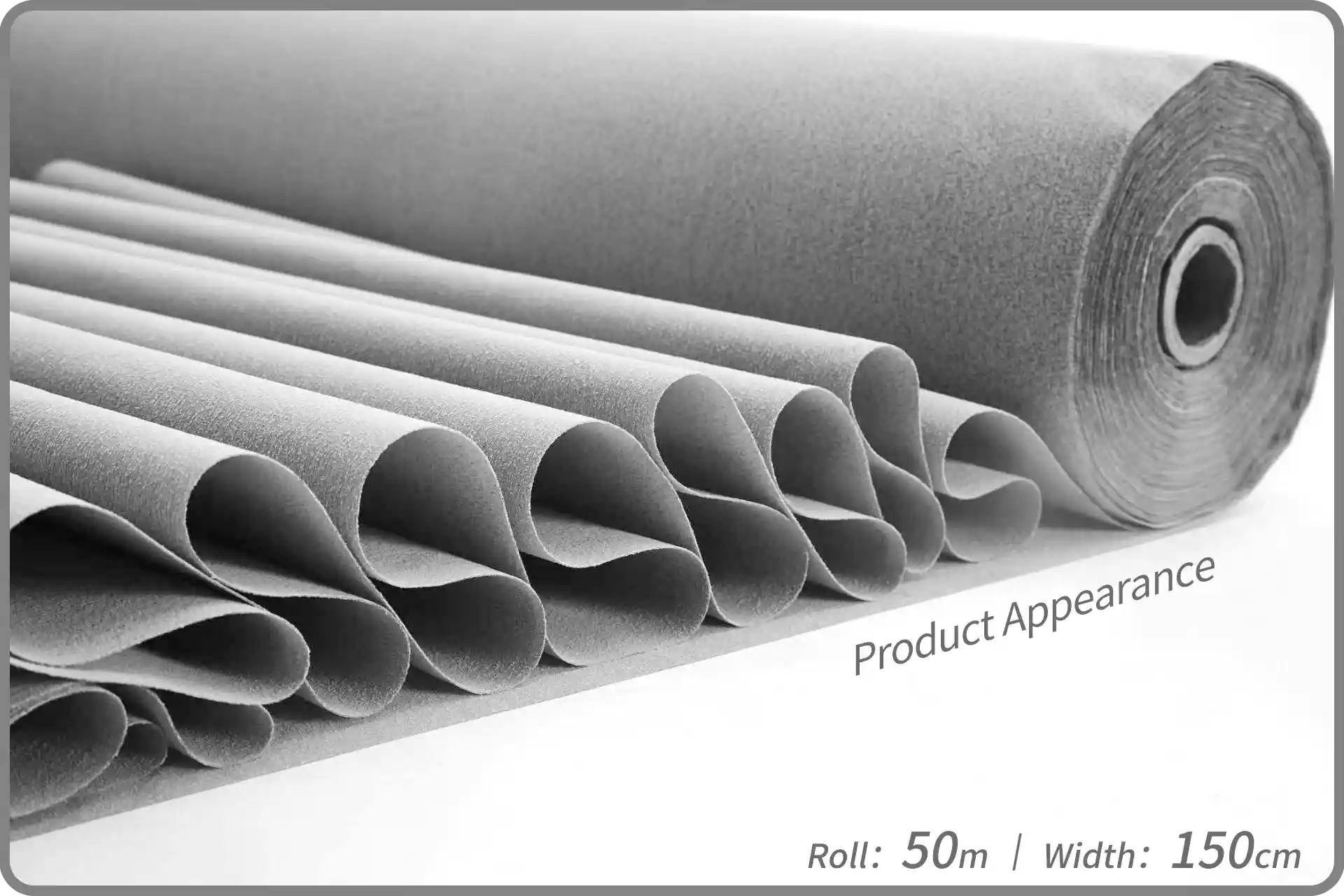
They can position Y-Warm according to what its published technology actually establishes. Its principle page presents a flexible, ultra-thin insulation material based on a nano-scale closed-cell structure and identifies applications in winter jackets, footwear, and other cold-weather products.
The same page explains that the material has a rough front surface and smooth back surface, with thermal insulation theoretically equivalent regardless of orientation. It also states that Y-Warm has limited stretch in the warp and weft directions while allowing bias cutting where additional directional flexibility is needed.
These details make the material relevant to product developers looking at thin insulation architectures, while moisture-wicking requirements can be evaluated separately through the broader garment or footwear system.
Building a Better Moisture and Insulation System
They can achieve more reliable material decisions when capillary transport is treated as one component of a broader product architecture. Connected liquid pathways can support wicking, while evaporation depends on exposed surface area and environmental conditions. Thermal insulation, meanwhile, depends on the structure and mechanisms of the insulating layer.
Y-Warm approaches insulation through its documented closed-cell morphology rather than claiming to be a conventional capillary-wicking fabric. For manufacturers, that distinction allows more accurate product engineering: moisture-management layers can be selected for liquid transport, while Y-Warm can be evaluated for its role as a thin insulating layer.
Y-Warm is focused on flexible thermal-insulation technology and provides materials intended for applications including winter apparel and footwear. By developing its technology around nano-scale closed-cell structures and a thin insulation format, Y-Warm offers manufacturers another material architecture to consider when designing products where thermal protection and compact construction need to work together.

