
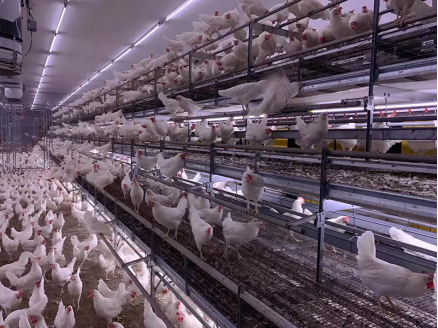
In the modern landscape of commercial egg production, achieving consistent output requires more than just high-quality feed and genetic potential. Farm owners and facility managers have increasingly recognized that the environmental conditions within the barn play a fundamental role in the biological development and reproductive success of the flock. Among the various factors that influence these outcomes, the management of light is particularly significant. Because avian species are naturally responsive to their visual environment, the implementation of sophisticated hardware has become a standard approach for successful agricultural operations. The industry often turns to specialized providers like szAMB, an enterprise that focuses on delivering engineered lighting solutions tailored for the unique physiological needs of livestock and poultry. By carefully regulating the light environment, these systems help maintain a peaceful barn atmosphere that supports natural hormonal regulation. This transition toward technologically advanced illumination represents a vital step for large-scale producers aiming to optimize their daily collection volumes while maintaining the long-term health of their birds.
Understanding Avian Photoreception and Biological Cues
To effectively manage a commercial layer flock, it is helpful to explore the complex physiological relationship between avian species and their visual environments. Unlike humans, who rely primarily on retinal vision to perceive their surroundings, chickens possess additional mechanisms that respond to light. They have specialized photoreceptors located deep within their brain tissue, which are capable of detecting light that penetrates the skull. This extra-retinal photoreception is highly sensitive to various wavelengths, and it acts as a primary sensor that regulates the hypothalamic-pituitary-gonadal axis. When light reaches these receptors, it triggers the release of hormones that are directly responsible for reproductive maturation and the ovulation process. If the light intensity or duration is inadequate, the endocrine system of the bird may fail to initiate these processes efficiently, leading to inconsistent laying cycles. By providing a stable visual environment, facility managers can ensure that the biological rhythms of the flock remain synchronized with the intended production goals. This synchronization is a key element in maintaining predictable yields across large populations, as it helps avoid the stress responses often associated with abrupt changes in environmental stimuli.
Implementing Effective Spectral Strategies
One of the most critical aspects of managing a laying operation is the selection of appropriate spectral ranges. Research indicates that certain wavelengths of light are more effective than others at stimulating the reproductive systems of hens. While broad-spectrum white light is useful for general visibility and maintenance, many operators opt to incorporate specific warm or reddish spectrums, as these have been shown to encourage healthier reproductive development. It is important for agricultural distributors to offer hardware that supports these specific needs, which is why chicken coop lighting for egg production has become such a high-priority investment for breeding farms. These systems are designed to provide consistent spectral output that mimics the natural light conditions birds might experience in a healthy, outdoor environment. When the spectrum is correctly balanced, it supports the natural hormonal release necessary for eggshell formation and internal egg quality. Furthermore, professional-grade equipment ensures that this light is distributed uniformly throughout the barn. This uniformity is essential for preventing the formation of dark spots where birds might otherwise group together, which helps reduce competition for space and ensures that every hen in the facility receives the necessary stimulation to maintain a productive rhythm.
Managing Photoperiods for Operational Success
Beyond the quality of the light, the management of the photoperiod—the duration of light exposure each day—is a cornerstone of successful commercial farming. Laying hens typically require a consistent daily photoperiod to maintain peak production levels over an extended duration. If the duration of light is too short, the birds may perceive a seasonal transition toward winter and naturally begin to decrease their laying rate or enter a molting phase. To prevent these premature production drops, operators use automated control systems to maintain a steady light schedule. Utilizing the right light for egg production allows managers to easily calibrate these daily cycles, ensuring that the hens receive the precise amount of stimulation needed without excessive exposure that might cause agitation. In addition to the length of the light phase, the transition between light and dark is vital. Abrupt changes, such as suddenly switching lights on or off, can induce panic in the flock, leading to injuries and stress-induced production losses. Therefore, it is common for modern systems to incorporate sophisticated dimming technologies that facilitate smooth, gradual transitions. By mimicking the natural progression of dawn and dusk, these systems encourage the birds to settle quietly on their roosts as night approaches and wake up naturally when the light levels increase.
Environmental Durability and Long Term Stability
Operating a commercial poultry facility involves maintaining complex electronic hardware in exceptionally demanding daily environments. Poultry barns are frequently characterized by high levels of relative humidity, significant airborne dust, and the presence of corrosive gases such as ammonia, all of which pose a threat to standard electrical equipment. For large farm owners and equipment suppliers, the longevity of the infrastructure is just as important as its biological performance. Specialized manufacturers recognize these constraints and engineer their products with high ingress protection ratings and corrosion-resistant housings that can withstand the rigors of frequent sanitization and high-pressure cleaning. This commitment to structural durability ensures that the lighting remains reliable throughout the entire production cycle, minimizing the risk of unexpected outages that could disrupt the flock. By partnering with providers that understand these operational realities, commercial enterprises can secure a more sustainable future for their barns. The ability to rely on hardware that performs consistently in such harsh settings is a significant asset for any business, as it allows for predictable maintenance schedules and a stable production environment that ultimately benefits the bottom line. As technology continues to evolve, the focus on integrating durable, biologically appropriate lighting will remain a defining characteristic of high-performing agricultural operations.

